English
Introduction
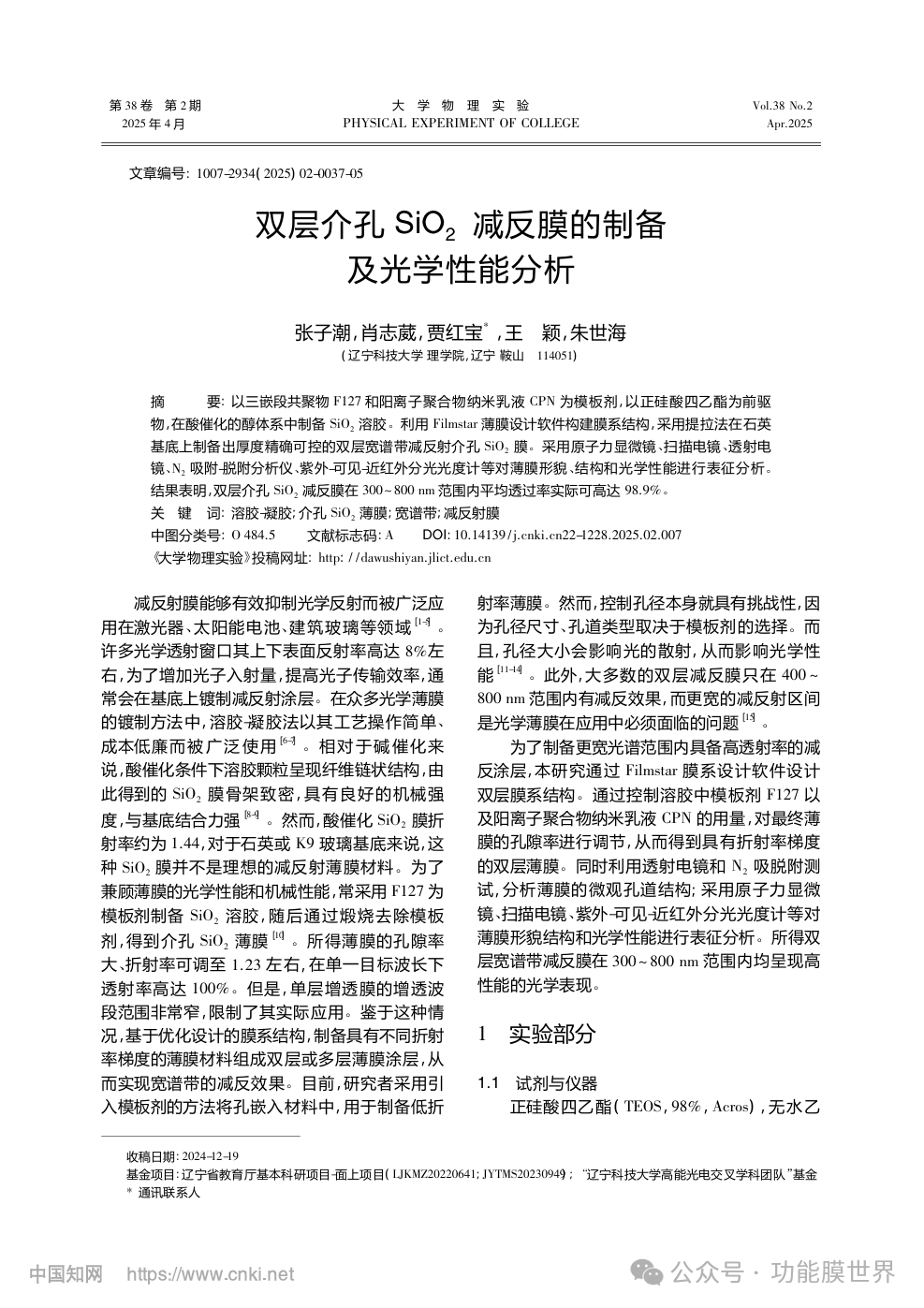
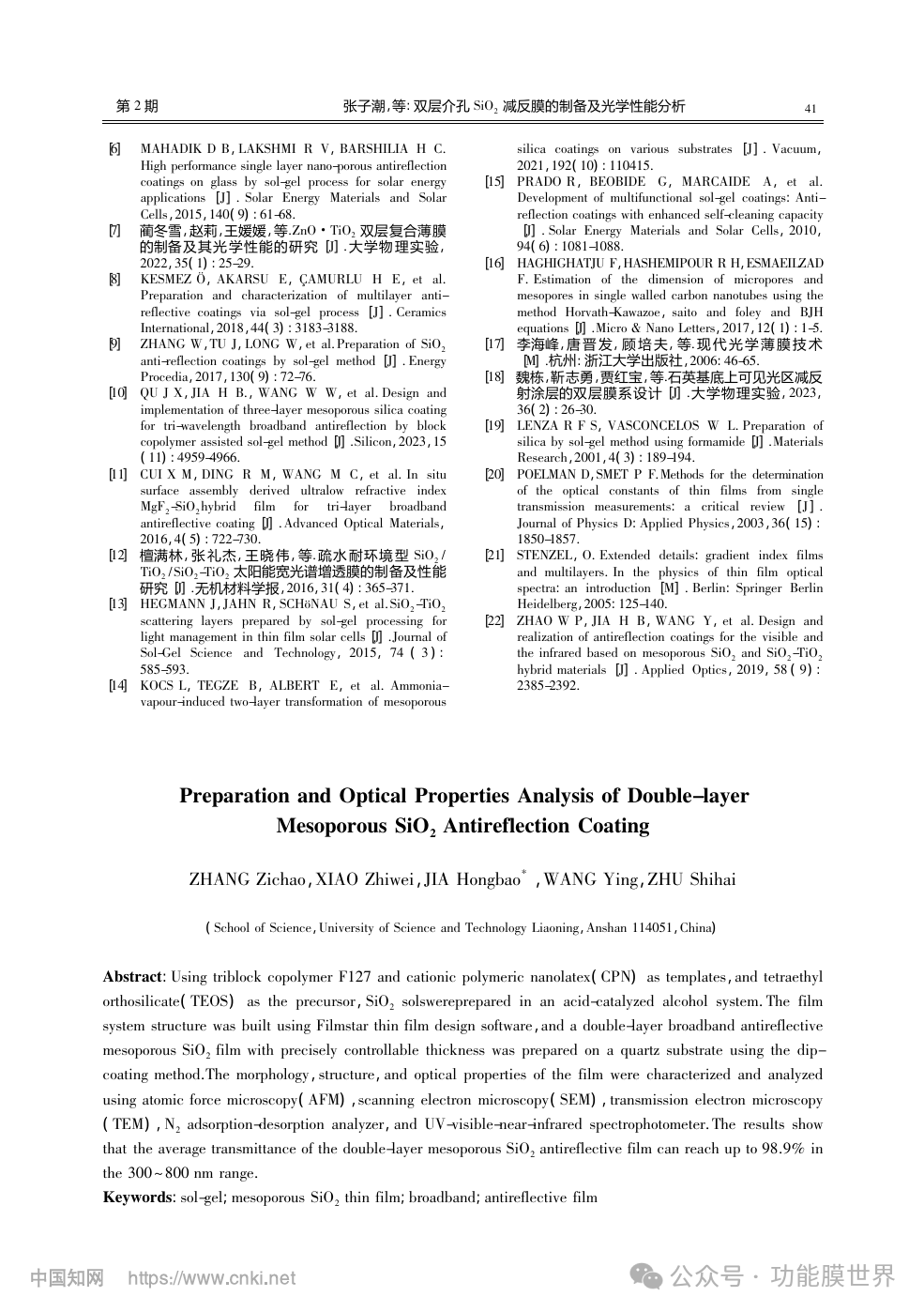
Antireflection film is a kind of film that can effectively suppress optical reflection, and is widely used in laser, solar cell, building glass and other fields. In order to improve the efficiency of photon transmission, antireflective coatings are usually coated on the substrate of optical transmission window. Sol gel method is widely used because of its simple operation and low cost. The SiO ɑ film prepared under acid catalysis has good mechanical strength and adhesion with the substrate, but its refractive index is high, so it is not suitable for direct use as an ideal antireflection film material. Therefore, researchers often use template to prepare Mesoporous SiO ɑ films to achieve low refractive index and high transmittance.
research method
Sol preparation: using tetraethyl orthosilicate (TEOS) as precursor, triblock copolymer F127 and cationic polymer nanoemulsion CPN as template, SiO ɑ sol was prepared in acid catalyzed alcohol system. By controlling the amount of template and adjusting the porosity of the final film, the bilayer film with refractive index gradient is obtained.
Film preparation: double layer wide band antireflection Mesoporous SiO ɑ film was prepared on quartz substrate by Czochralski method. By accurately controlling the pulling speed, the film thickness can be strictly controlled.
Film system design: the film system structure is constructed by using filmstar film design software, and the thickness and refractive index of the double-layer film are optimized to achieve the antireflection effect of wide spectral band.
Performance characterization: the morphology, structure and optical properties of the film were characterized and analyzed by atomic force microscope (AFM), scanning electron microscope (SEM), transmission electron microscope (TEM), n ɑ adsorption desorption analyzer, UV visible near infrared spectrophotometer, etc.
experimental result
Optical properties: the average transmittance of the double-layer Mesoporous SiO ɑ antireflection film can be as high as 98.9% in the range of 300~800 nm, and the transmittance in the ultraviolet region at 350 nm is still more than 98.5%.
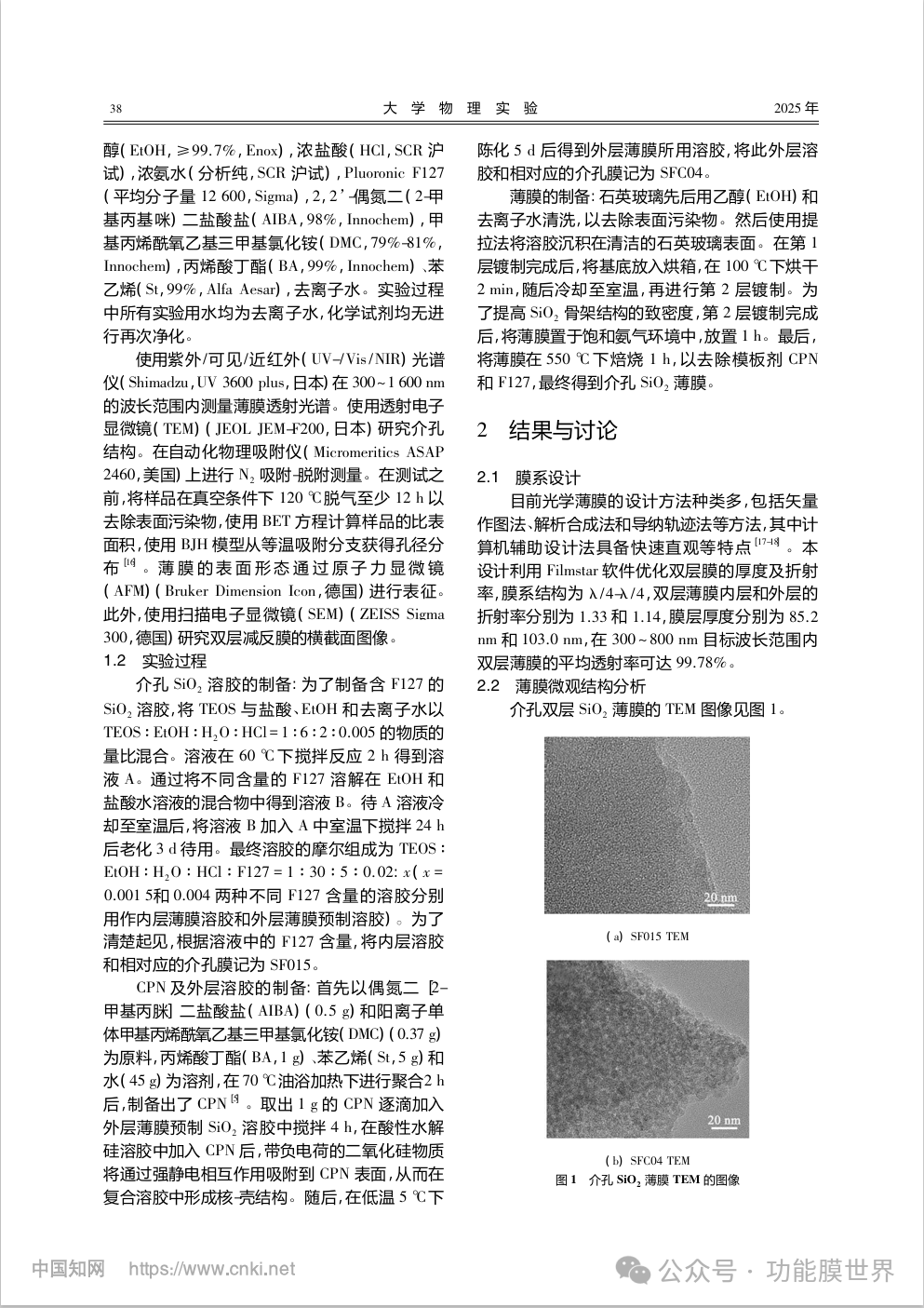
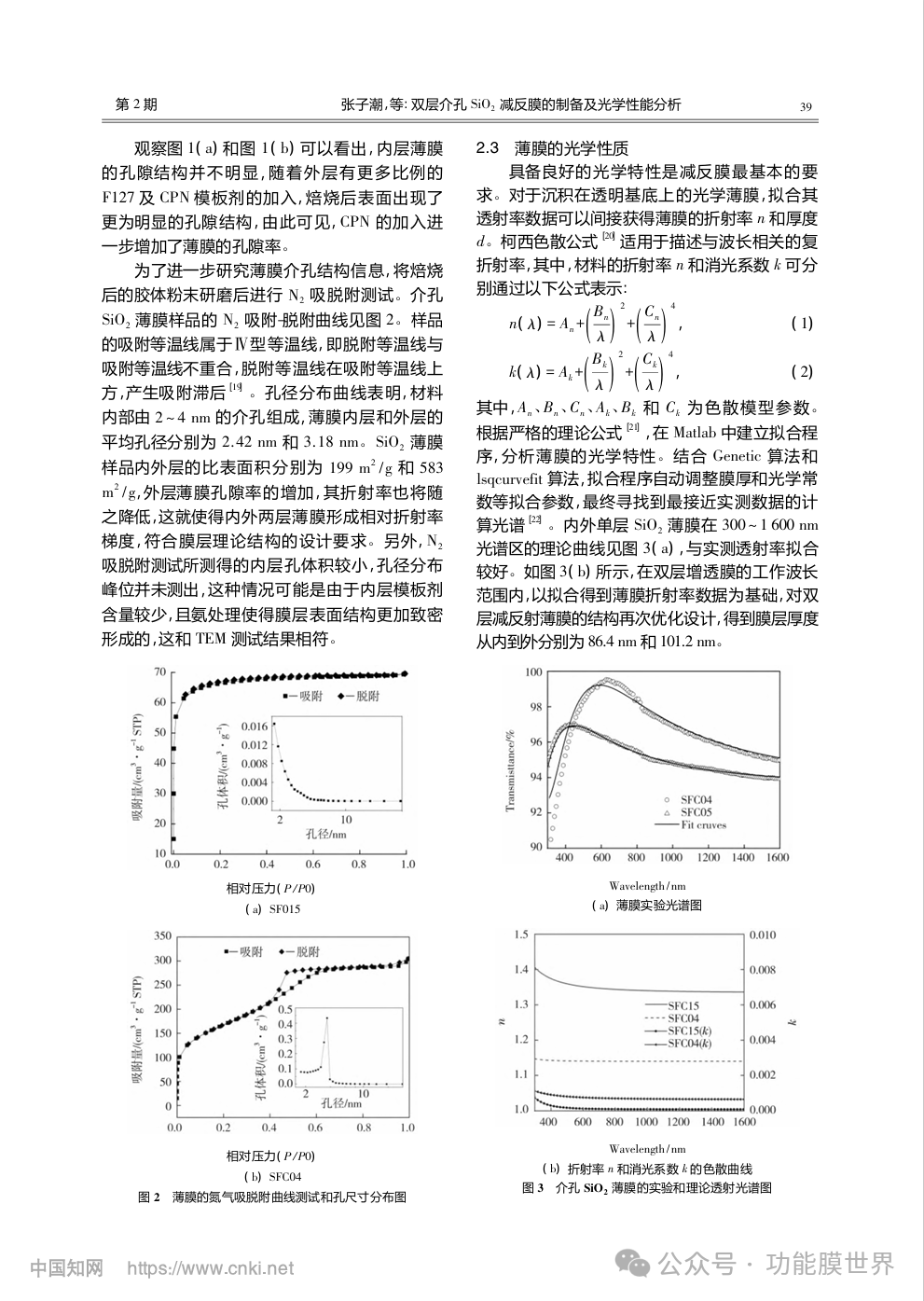
Microstructure: the micro pore structure of the film was analyzed by TEM and N ɑ adsorption desorption test. The results show that the pore structure of the inner film is not obvious, while the outer film has more obvious pore structure after calcination due to the addition of more template. The specific surface area of the outer film is 583 m ²/g, which is much higher than that of the inner film of 199 m ²/g, indicating that the refractive index of the outer film decreases with the increase of porosity, forming a relative refractive index gradient.
Surface morphology: AFM characterization results show that the root mean square roughness (RQ) value of the double-layer antireflection film surface is 3.77 nm, which is far less than the visible wavelength, indicating that even in the ultraviolet region, the influence of the surface and interface scattering of the double-layer coating on the transmittance data is relatively small.
Film thickness: confirm the film thickness of each layer in the double-layer antireflection film through the cross-sectional SEM image. There is a small difference between the thickness of each layer and the design value, indicating that the film thickness can be strictly controlled by accurately adjusting the lifting speed.
Key conclusions
Bilayer Mesoporous SiO ɑ antireflection film: by controlling the amount of template, a bilayer Mesoporous SiO ɑ antireflection film with refractive index gradient was successfully prepared. The average transmittance of the film in the range of 300~800 nm reached 98.9%, showing excellent optical properties.
Preparation process: the combination of sol-gel method and Czochralski method provides a practical and generalizable method for the preparation of double-layer wide band antireflection film.
Application prospect: This double-layer Mesoporous SiO ɑ wide spectral band antireflection film is expected to meet the application requirements of optical thin film devices in many fields, and has a wide application prospect.
epilogue
This study not only provides a method to prepare high-performance double-layer Mesoporous SiO ɑ antireflection film, but also verifies the high transmittance and good optical properties of the film in a wide spectral range through experiments, which provides a new possibility for the application of optical films.
Original document