English
Introduction
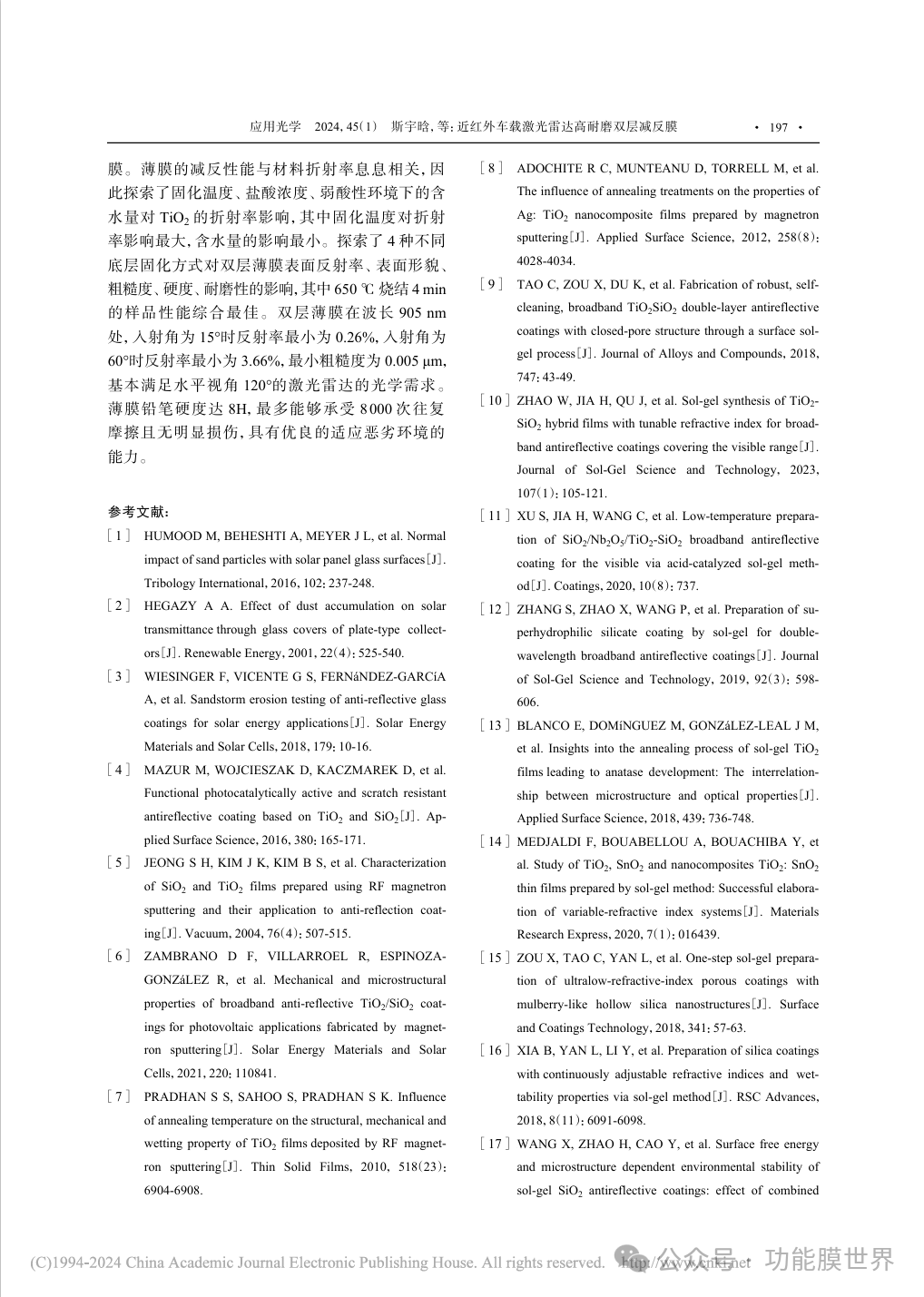
The core content is about the research of high wear-resistant double antireflection film for near-infrared vehicle lidar. The optical and mechanical properties of the double-layer antireflection film prepared by sol-gel method combined with high temperature curing process were studied experimentally, and the effects of different process parameters on the film properties were discussed. The following is an overview of the core content of the article:
background knowledge
Lidar has an important application prospect in the field of auto driving, especially the lidar with the working wavelength of 905 nm. However, the commonly used magnetron sputtering antireflection film has the problem of insufficient wear resistance, which is difficult to adapt to the harsh outdoor environment. Therefore, the researchers used sol-gel method combined with high-temperature curing process to provide a high wear-resistant and low-cost solution for the antireflection film of vehicle borne lidar.
research method
Sol preparation:
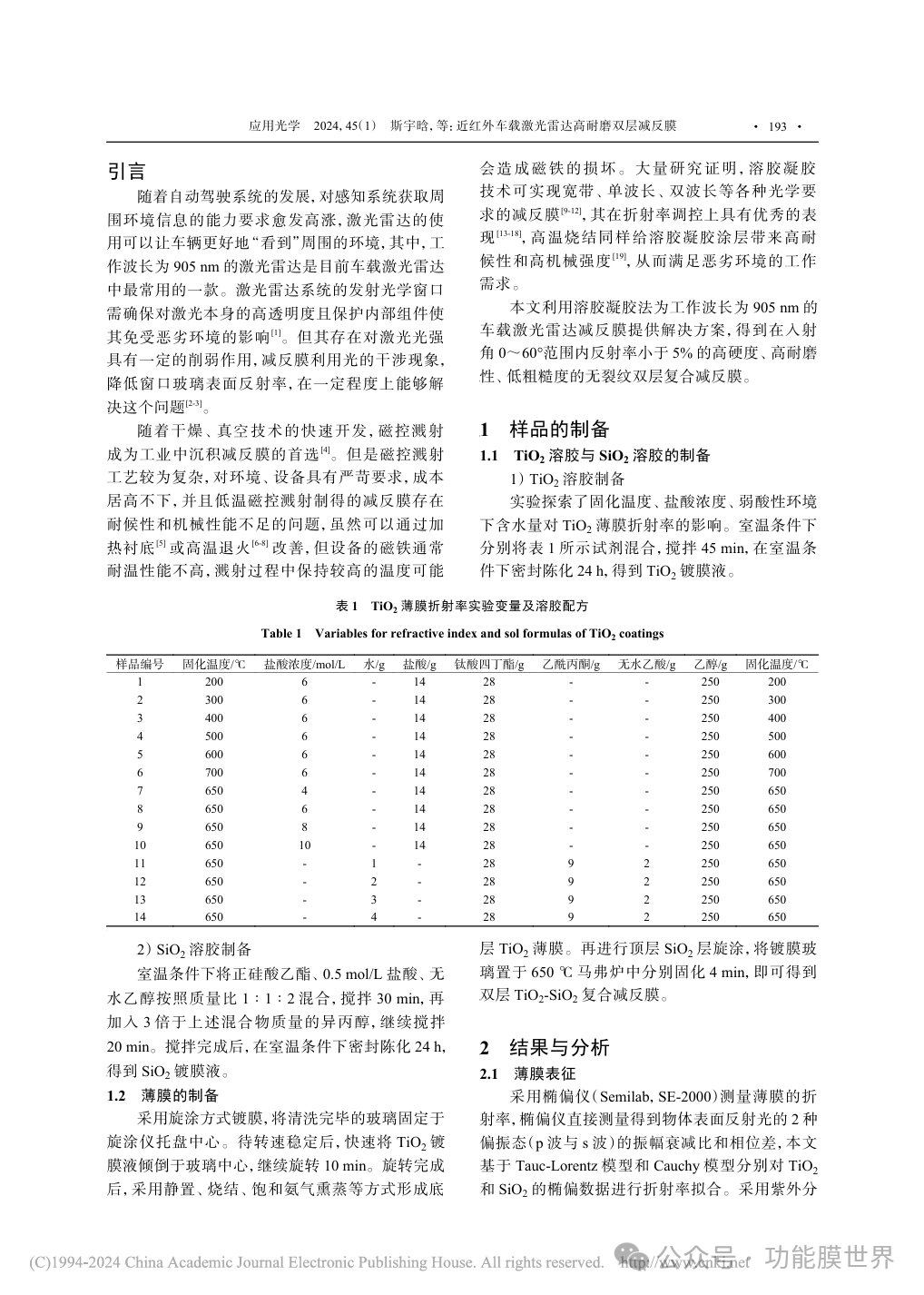
Preparation of TiO 2 Sol: the effects of curing temperature, hydrochloric acid concentration and water content in weak acidic environment on the refractive index of TiO 2 thin film were explored through experiments. By mixing a certain proportion of reagent, stirring and aging, the TiO ɑ coating solution is obtained.
Preparation of SiO ɑ sol: mix tetraethyl orthosilicate, hydrochloric acid and anhydrous ethanol in a certain proportion, add isopropanol after stirring, continue stirring and aging to obtain SiO ɑ coating solution.
Film preparation:
- spin coating method is adopted for coating. First spin coating TiO ɑ coating solution on the glass substrate to form the bottom layer of TiO ɑ film, then spin coating SiO ɑ layer, and finally cure in a 650 ℃ muffle furnace for 4 minutes to obtain a double-layer TiO ɑ -sio ɑ composite antireflection film.
Membrane system design:
TFCalc software was used to design the film system and simulate the reflectivity curve of the composite film at 60 °.
Performance characterization:
The refractive index of the film was measured by ellipsometer, the transmittance was measured by ultraviolet spectrophotometer, the particle size of the sol was measured by laser particle size analyzer, the surface morphology and roughness of the film were measured by laser confocal microscope, the reflectivity was measured by spectrometer, the wear resistance of the coating was evaluated by reciprocating wear tester, and the hardness of the coating was evaluated by wheeled pencil hardness tester.
experimental result
Factors affecting the refractive index of TiO ɑ thin films:
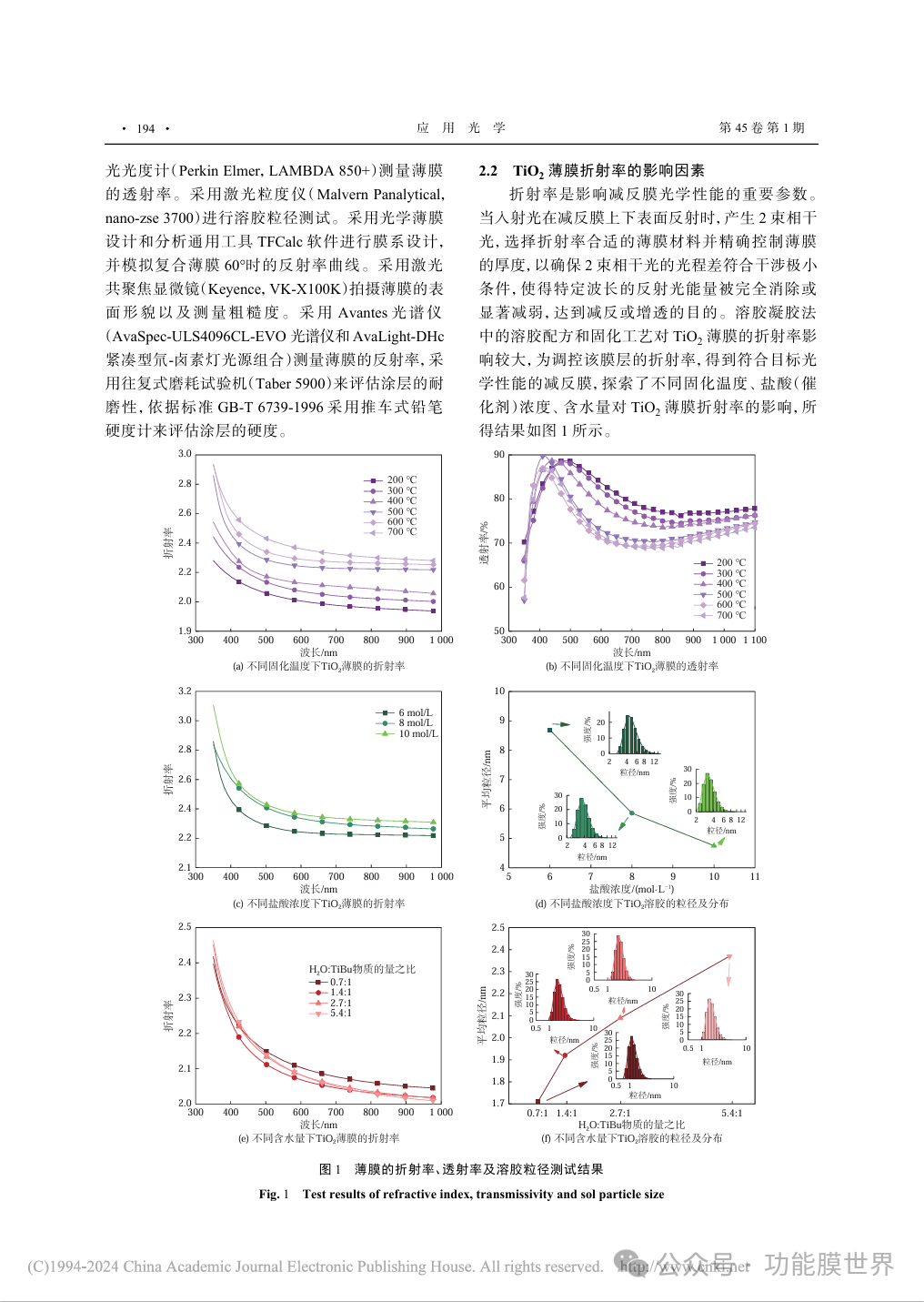
Curing temperature: with the increase of curing temperature, the refractive index of TiO ɑ film shows an upward trend and the transmittance shows a downward trend. The refractive index changes greatly between 400 ℃ and 500 ℃, which may be due to the transformation of TiO ɑ from anatase structure to rutile structure.
Hydrochloric acid concentration: the refractive index shows a slow upward trend with the increase of hydrochloric acid concentration, because the higher the hydrogen ion concentration, the slower the polymerization rate of rubber particles, and the higher the compactness after curing.
Water content: the increase of water content has little effect on the refractive index, but the particle size is slightly larger.
Reflectivity of double-layer film:
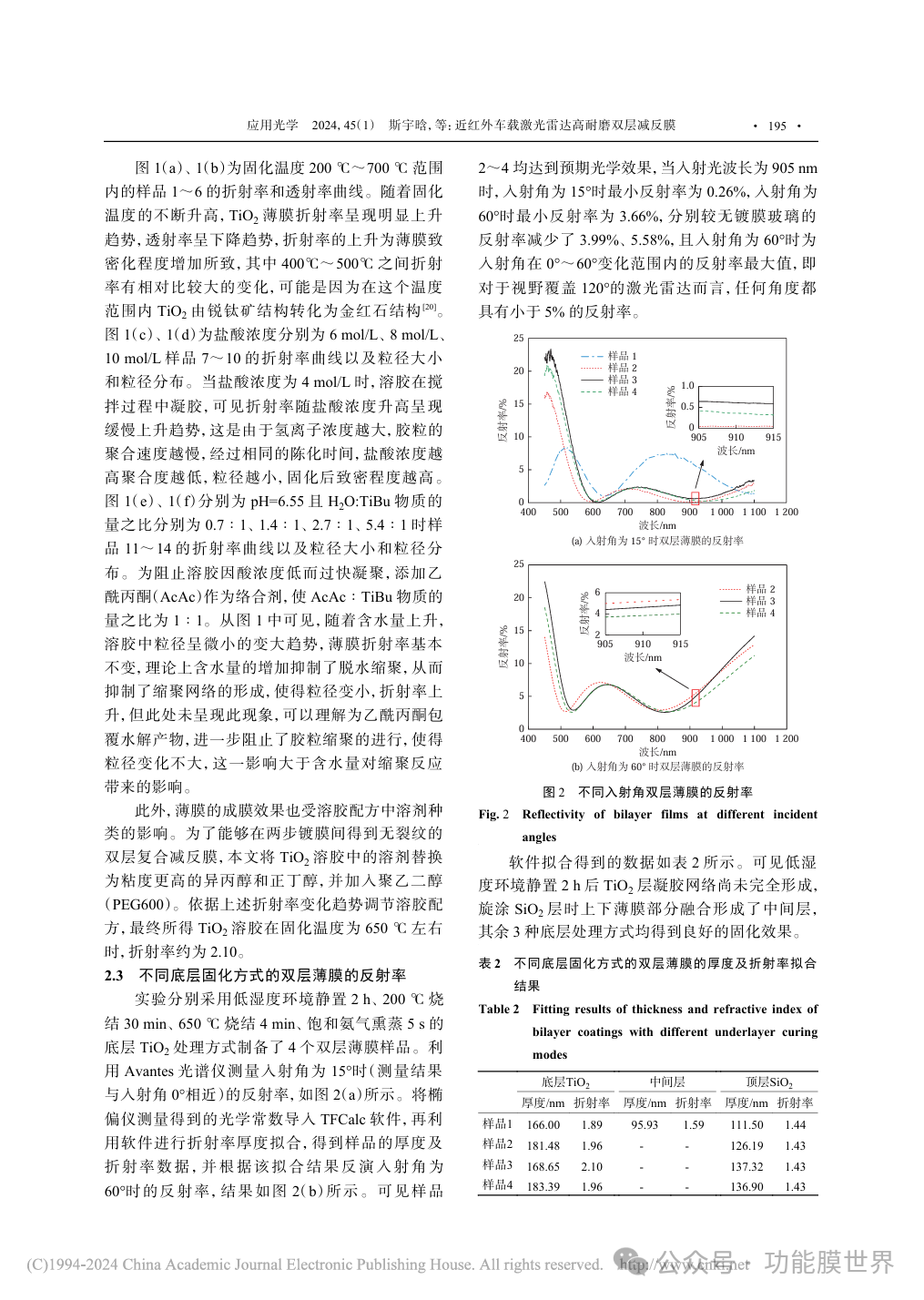
The reflectivity test results of the bilayer film samples prepared by different bottom curing methods at 905 nm wavelength show that the minimum reflectivity is 0.26% at the incident angle of 15 ° and 3.66% at the incident angle of 60 °, which meet the optical requirements of the lidar with a horizontal angle of view of 120 °.
Surface morphology and roughness of bilayer films:
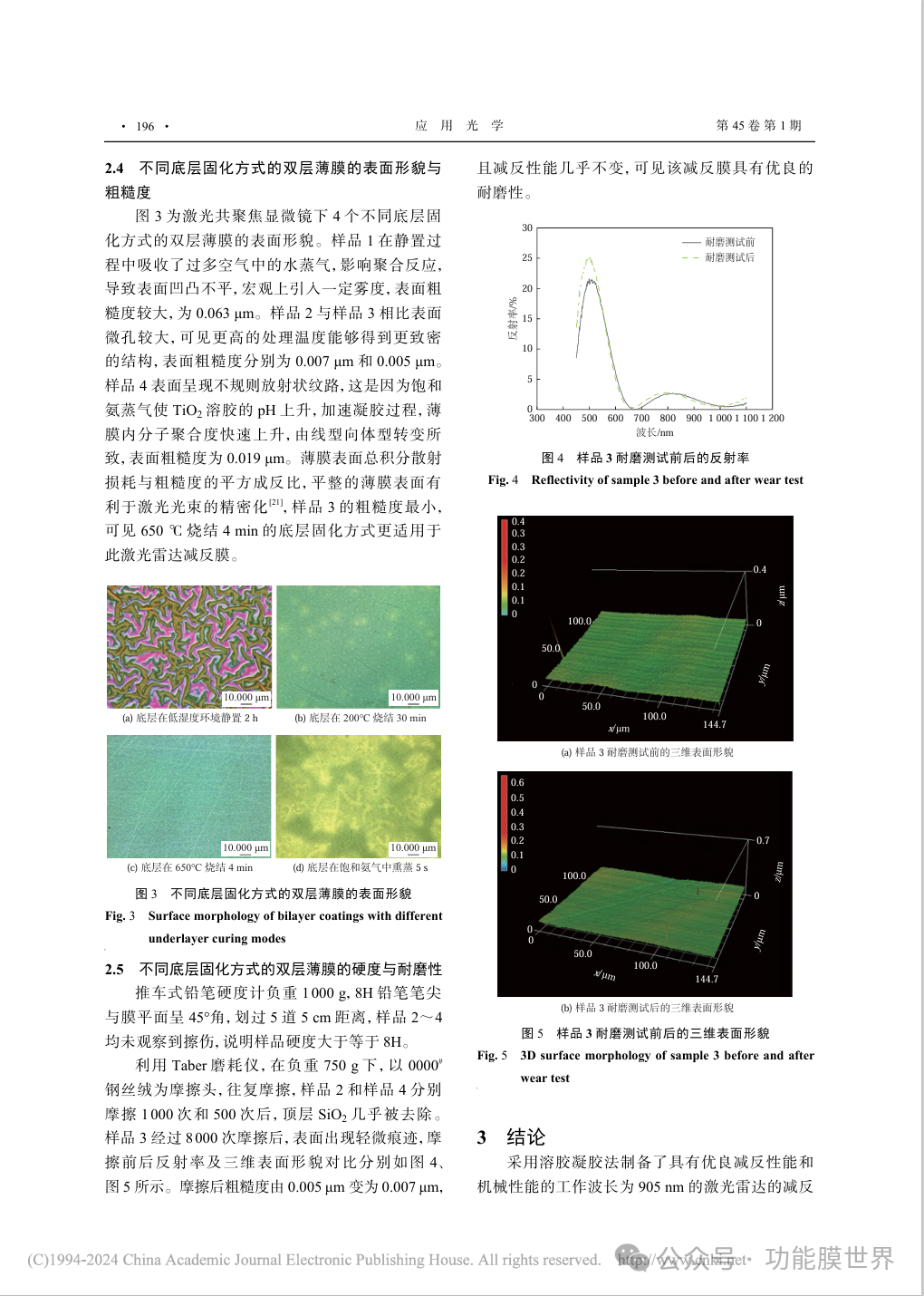
The results show that the surface of the film is the smoothest and the minimum roughness is 0.005 μ m, which is suitable for laser radar antireflection film.
Hardness and wear resistance of double-layer film:
The hardness of the film pencil reaches 8h, and it can withstand 8000 times of reciprocating friction at most without obvious damage. It has excellent ability to adapt to harsh environment.
Key conclusions
Performance of double-layer antireflection film: the double-layer antireflection film prepared by sol-gel method shows excellent antireflection performance at 905 nm wavelength. The reflectivity is less than 1% when the incident angle is 15 °, less than 5% when the incident angle is 60 °, and the minimum roughness is 0.005 μ m, which meets the optical requirements of lidar.
Influence of process parameters: the curing temperature has the greatest influence on the refractive index of TiO ɑ film, and the influence of water content is the least. The comprehensive performance of the bottom layer cured at 650 ℃ for 4 minutes is the best.
Mechanical properties: the film has high hardness and excellent wear resistance, and can adapt to harsh environment.
epilogue
This research provides a high wear-resistant and low-cost antireflection film solution for the vehicle borne lidar with the working wavelength of 905 nm. By optimizing the process parameters, a double-layer antireflection film meeting the requirements of optical and mechanical properties is prepared, which has important practical value.
Original document